Finding a new audience
An agency's best clients were the wrong customers for their new platform. Finding the right ones, and learning what they needed first.
At a glance
- Situation
- Vamp had grown by giving a handful of corporate clients a hands-on, full-service agency. That care was its strength, but it didn't scale, and it couldn't be packaged as software.
- Task
- As Head of Product, define who a self-serve platform should be for, and what they would need from it first.
- Action
- Looked past the agency's core clients to customers who already ran their own campaigns, studied the dozen self-serve customers Vamp quietly had, and turned what they valued and missed into a roadmap.
- Result
- A clear ideal customer, three product gaps ranked by the people who felt them, and Creator Discovery first off the block.
A service built for clients who wanted an agency
Vamp saw influencer marketing coming before it took off. Brands wanted experts to find the right creators and shape campaigns their audiences would respond to. Creators wanted partnerships that paid well and felt natural to their followers. Vamp connected the two, and became the outsourced social media team for a handful of corporate clients who didn't want to build one in-house.
The work sat between two cultures. Brands were used to full control of creative direction and the final output; creators knew their best content came in their own voice and style. Expectations about professionalism and pay were still being worked out across a young industry, and Vamp's processes grew up alongside it.
Vamp was known for getting every job over the line. It found emerging creators, often better value and more trusted by their audiences, and made sure the content showed each brand the way it expected. That took a lot of hands-on work: chasing deliverables, managing relationships, stepping in at the last minute. Work like that is hard to plan for, and harder to automate.
Decide who self-serve is for
When I joined, the plan I laid out put customer interviews up front, and it's what led the CEO to ask me to lead product. Alongside the product work in my first months, I documented how work was done, where the effort went, and what could be standardised. The bigger question: if Vamp became a self-serve platform, who would use it, and what would they need from it first?
Look past the clients we had
Accept that our best clients weren't the customer
Our corporate clients relied on what an agency gives: expertise, responsiveness, and a person solving the creative problem in front of them. That value couldn't be swapped for software, and we didn't want to try.
The customer for self-serve was someone who didn't need an agency because they had one, or were one. They already knew how to spot a good brand match, brief and manage creators, and run a campaign that reached its audience. What they needed was tools that fit how they already worked.
Learn from the self-serve customers we already had
About a dozen customers were already using Vamp on their own, quietly, without our team running their campaigns. We consulted each of them: what value were they getting, how did they coordinate their work, and what other tools held it all together? Their answers showed how the product would need to fit into their day.
Hear what worked, and where it fell short
Three answers came up again and again:
- A big pool of emerging creators, better value and trusted by their audiences. But they had to look each one up elsewhere to judge the fit.
- A record of who they'd worked with and how each collaboration was going. But not a complete one, so they kept extra spreadsheets.
- Payments to creators that stayed compliant. But it could be easier.
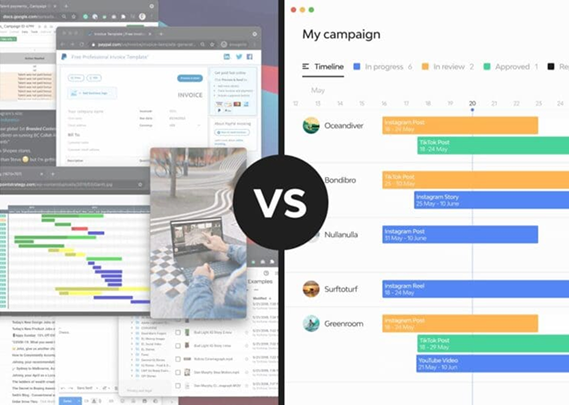
Turn the gaps into a roadmap
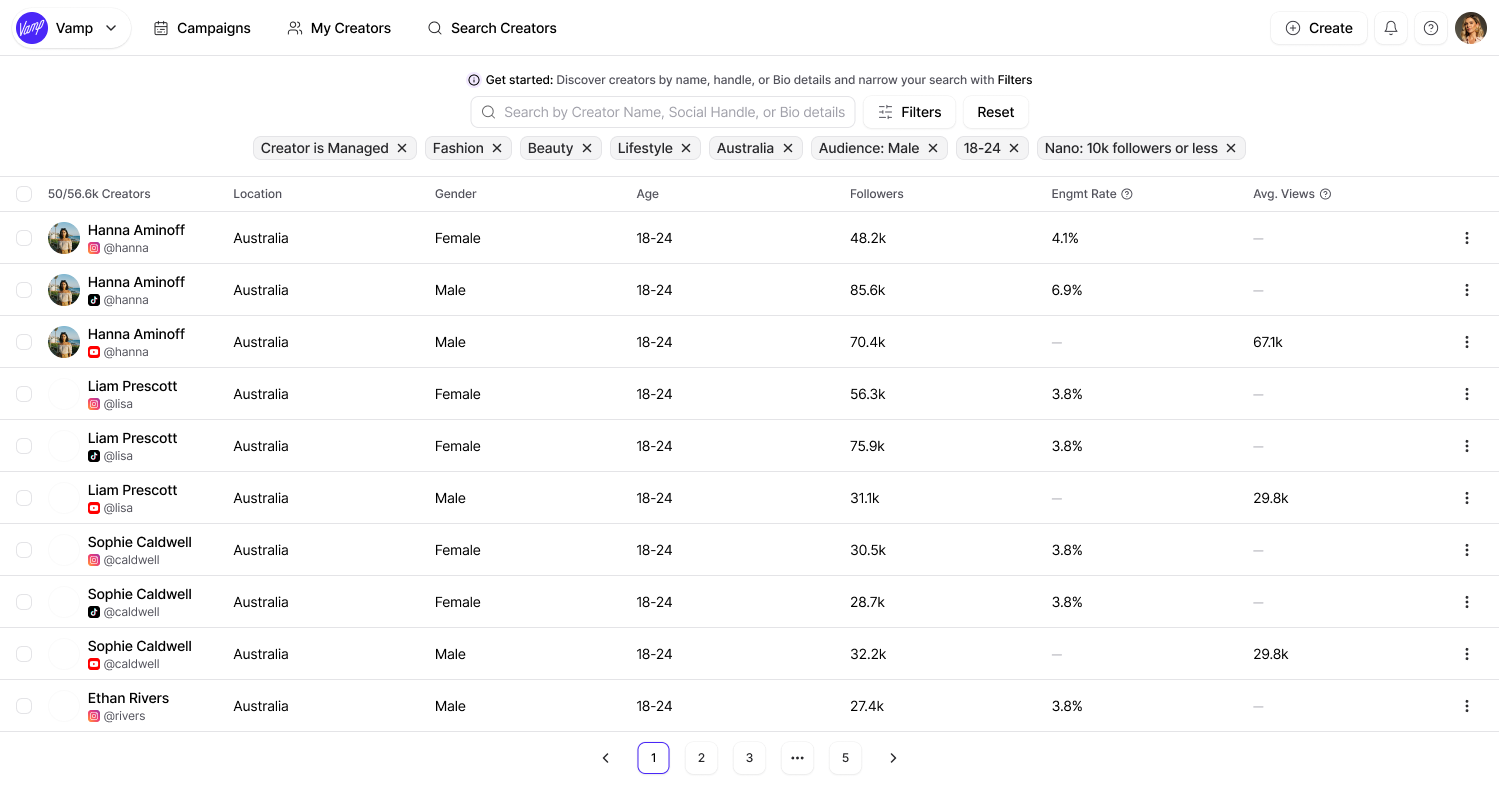
Each answer named something customers already valued and a gap beside it, so the roadmap more or less wrote itself: judge creators without leaving Vamp, track every collaboration in one place, and make payments simpler. Creator Discovery came first, because choosing creators well made everything after it easier.
Until then, only Vamp's own campaign managers could search creators by criteria and audience demographics. Customers had asked for that search themselves, so we built it for them.

A customer, a ranked set of gaps, and a first build
- ~12self-serve customers consulted, the people the platform was being built for.
- 1clear ideal customer: agencies and brand teams that run their own creator campaigns.
- 3product gaps, named and ranked by the customers who felt them.
- Firstbuild, Creator Discovery, shipped with about 80% of active creators updating their profiles before launch.
Creator Discovery was the only stage built. In early 2026, a change within the founding team, unrelated to the product work, took Vamp back to their roots as an agency before the next stages began.