Vamp
As Vamp's first Head of Product, I helped an influencer marketing agency become a self-serve platform, from vision and data through to the product itself.
The role at a glance
- Business
- A Sydney influencer marketing agency, founded in 2015, with its own platform connecting brands and content creators.
- Hired to
- Partner with the CEO and CTO to take that platform to self-serve customers: find the path to market, and build the product practice to get there.
- Key wins
- A new company vision and narrative, a validated ideal customer profile, a horizons roadmap, company-wide reporting, and the launch of self-serve creator discovery.
- Moved on
- In 2026 a change of leadership took Vamp back to their roots as a service agency, and I moved on.
An agency with a product inside it
Vamp grew up alongside influencer marketing itself. Since 2015 it had run campaigns for brands end to end: finding creators, managing content delivery and reporting on performance. Along the way it built a strong internal toolkit to support its own team.
By 2025 Vamp had new leadership, and a plan to take that platform outdoors: open it to self-serve customers who would run their own campaigns, brief creators, collaborate on content and track results in one place.
Find the fastest path to self-serve
Vamp had several new people in its leadership team and was still shaping its strategy, and they hired me as a designer, the first official product-based role outside of engineering. When I started, I laid out a full plan of what I thought the move to self-serve would take, including customer interviews up front, to zero in on the ideal customer profile. The CEO recognised that it was more than one person's work, and asked me to lead it. Within a month I was Head of Product.
From there, my job was to work with the CEO, CTO and Commercial to find our most efficient path to market, and to give the company the product habits they needed to follow it.
Strategy first, then the evidence to back it
Audit where the team was patching the gaps
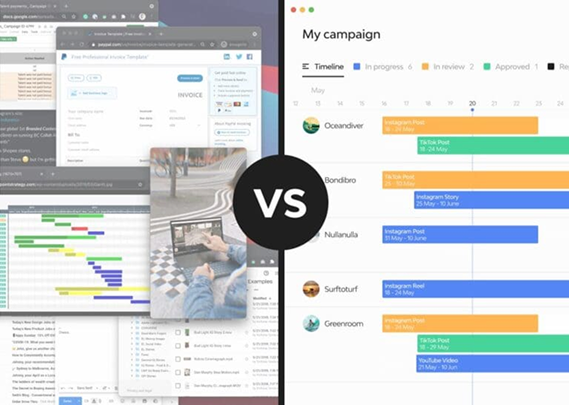
I started with how our own team worked: where they stepped outside our tools to get a campaign done. Every workaround was something a self-serve customer would hit without our team behind them, so the audit became the first draft of the product gap.
Choose the customers we could win first
I defined the ideal customer profile and validated the priority segments. A savvy digital marketing agency would shop for tools that made it more efficient and took on the work it didn't want in-house. As client managers, they'd already be strong on budgeting and reporting, but would want us to handle headaches like paying creators. That split our roadmap into showstoppers and nice-to-haves, and sharpened the pitch to the segments we could reach first.

Set a vision and a roadmap in horizons
With the CEO, I redefined the company's vision and narrative, repositioning Vamp from service delivery to a scalable platform. I turned that into strategic horizons and a roadmap that moved core capabilities from our services into the product, step by step.
Make the problems measurable
The team knew time was being lost, but almost nothing was tracked. To start, I sized problems from self-reported timecards, third-party tool costs and whether each issue blocked self-serve growth. Working with the CEO, CTO and Head of Enablement, I then led a company-wide reporting rollout in Looker. It improved our reporting to clients, let every team see where its own time went, and fed a problem-sizing framework we used to prioritise feature requests.
Find the lever that lifts everything
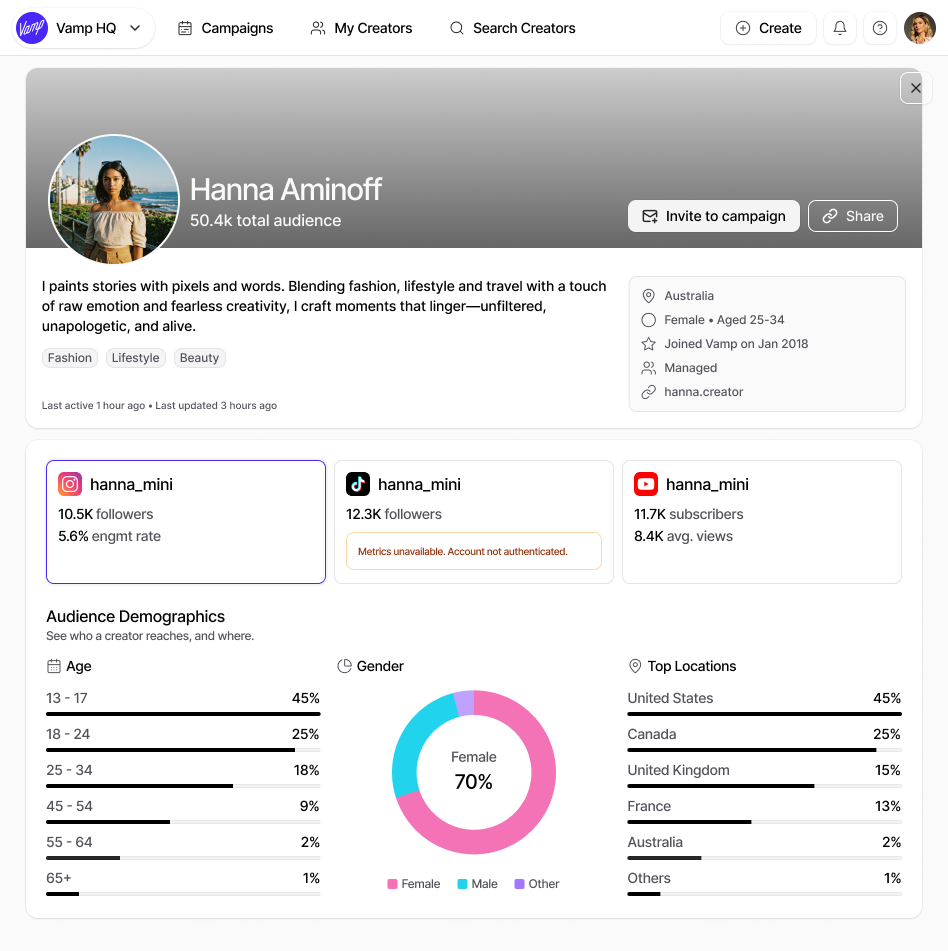
One pattern ran through the whole journey: choosing creators well cut busywork and produced better content. The best creators were natural spokespeople, knew how to translate a brand's value for their audience, and worked collaboratively. That made creator discovery the first major build.

Build product habits across the company
I brought product and design practices into a company that hadn't had them, and led the change across delivery teams to work in a product-led way. I unified scattered business data into a structure that supported metrics, shared knowledge and AI-assisted workflows. I replaced manual campaign processes with automated ones, and led my product and design leads, mentoring them to own their delivery.
The work, in detail
A change of direction
In early 2026 Vamp's leadership changed. Without a technical CEO or CTO in place, the company chose to return to their roots as a service agency, and I moved on in April. The work still stands as a model for the transition: a clear customer, a measured problem, and a first product that our own team and our customers both adopted.
What I took with me:
- A shift from services to product needs product thinking at the leadership table, not only in the product team.
- Measure first, even roughly. Improvised numbers were enough to rank problems and win support for fixing them.
- Ship in small, quiet steps, and bring every team that talks to customers along before launch.