Patient timelines
Who is this patient, and what matters today? A history a busy GP can read in seconds.
At a glance
- Situation
- GPs see hundreds of patients and have little time with each. Records were complex to read, and patients they saw rarely felt like strangers.
- Task
- Find a way to communicate a patient's identity and history quickly enough to give real insight in a short consult.
- Action
- Sliced the record into themes, charted events and trends on one timeline, let doctors focus on a single element's history, and extended the line into expected future care.
- Result
- A concept and prototype for reading a patient at a glance, and a base for care plans and drug warnings built on the same data.
Hundreds of patients, minutes each
GPs told us time was their scarcest resource and information the most overwhelming. Patient histories were extremely complex to analyse, and patients they saw rarely were almost strangers. Schedules were too full for close review, and appointments never felt long enough. One doctor put it plainly: they see a lot of people, and need to know who this one is and what matters about today's concern.
Show who the patient is, fast
Could we communicate a patient's identity and history efficiently enough to give a GP real insight in the time they have?
Slice the record, then read it as a story
Slice the record into themes
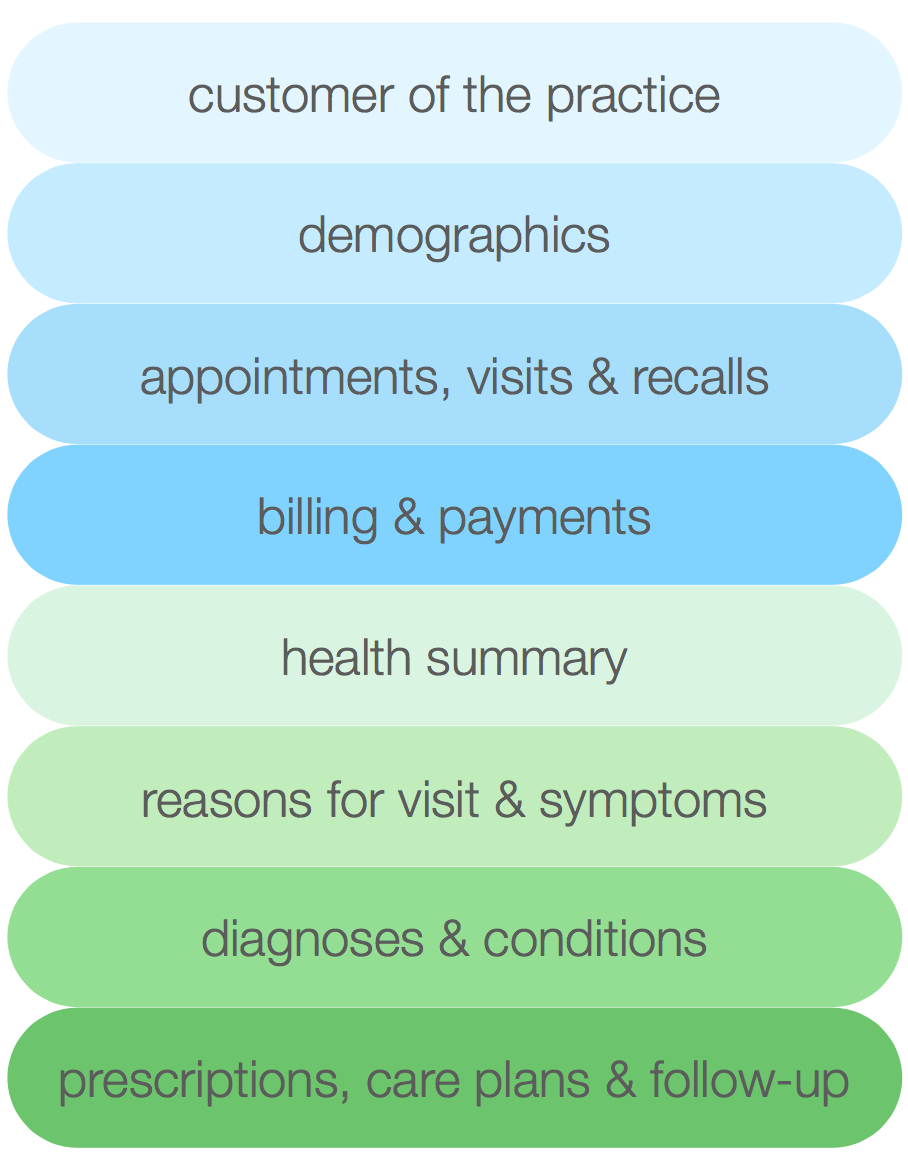
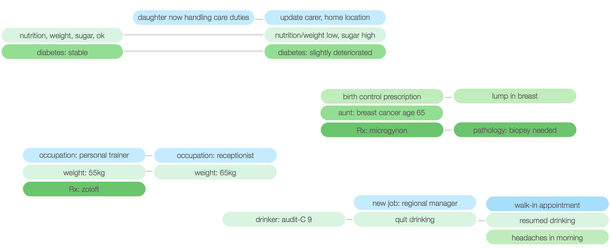
I broke a patient's record into the components that define them, which we called slices: who they are, their appointments, billing, health summary, reasons for visit, and more. One data point is one event, like a routine flu shot. Following one slice shows a trend, like whether blood pressure is improving. Reading several together builds a narrative of how things affect each other.
Focus on one thing at a time
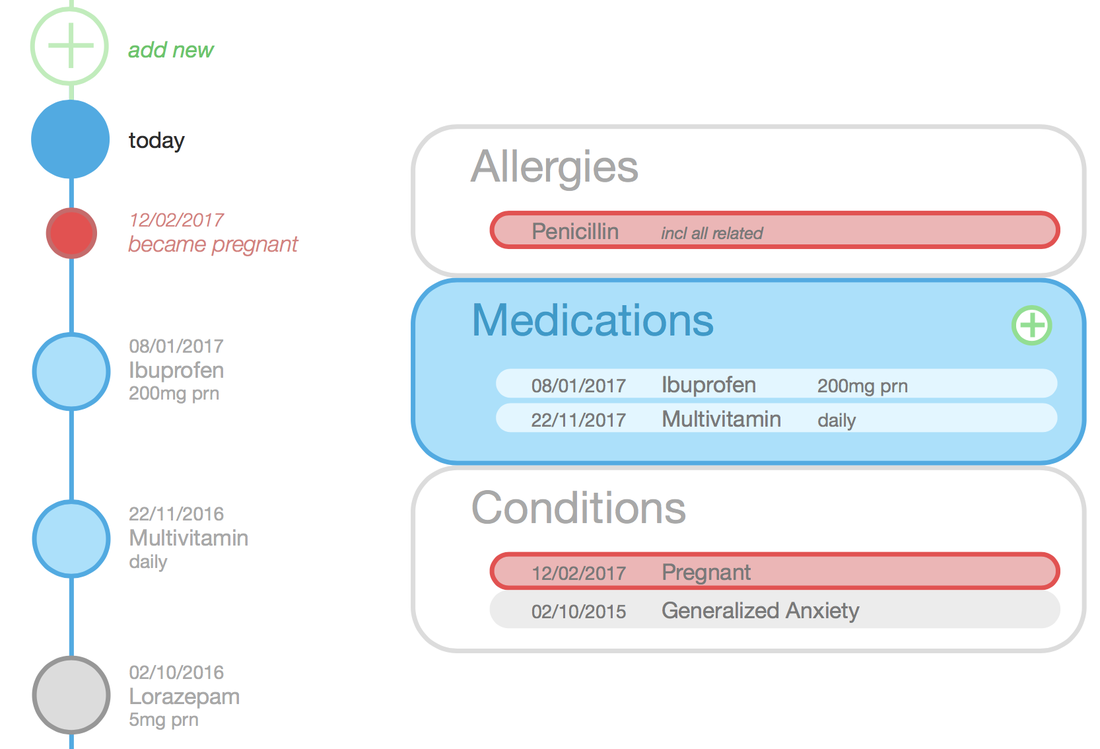
Doctors can turn the data along several axes to follow one element's history. Has the patient had this condition before? Taken this medication? How often do they visit? If the system learns which elements relate, it can flag links on its own, like a possible drug interaction or a likely root cause.
Extend the line into the future
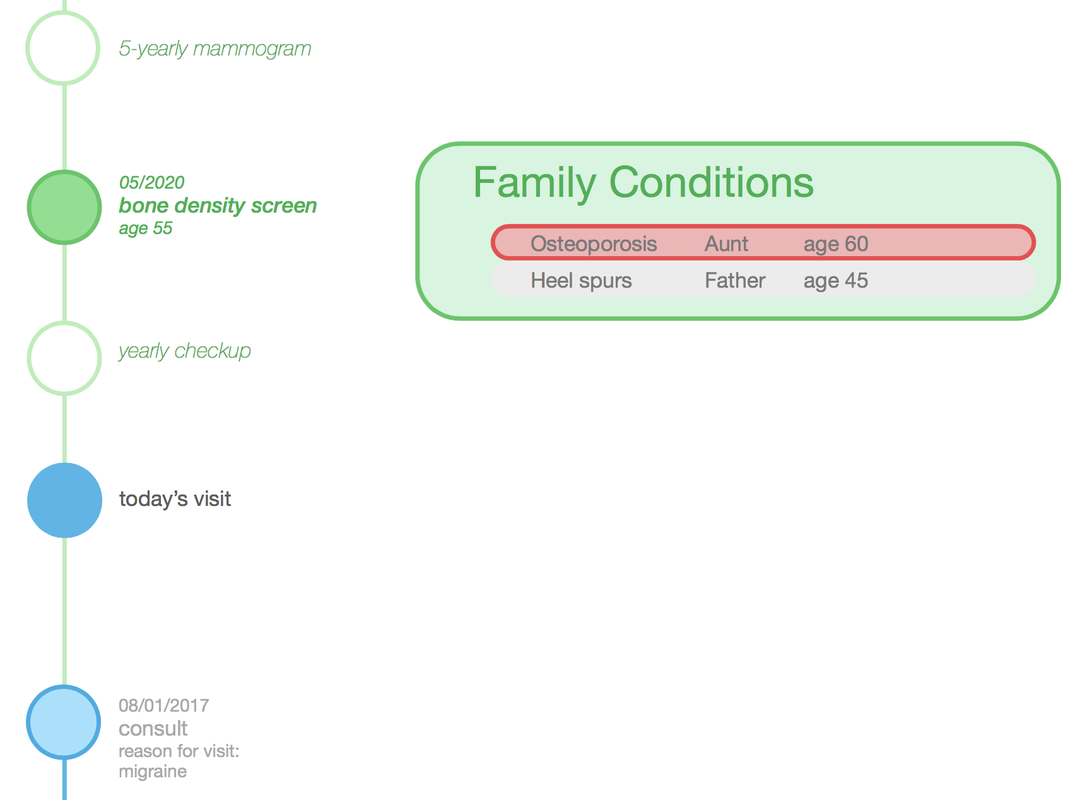
Once past events are charted, expected ones can be too: a yearly check-up, a five-yearly screening. That supports preventive care and wellness planning.
A patient you can read at a glance
- Conceptand prototype for a history GPs can read in seconds.
- Foundationfor self-building care plans and proactive drug warnings, built on the same slices.
- TestedShown to GPs as a prototype. Useful for exploring what the record could do; the roadmap went to more immediate priorities.
Where the concepts led, and what they taught me, is in the Medical Director story.