Self-building care plans
Care plans for chronic illness that assemble themselves from the record, and show each person in the care team only their part.
At a glance
- Situation
- Chronic illness brings related conditions and a team of carers: GP, specialists, nurses, family. Building a care plan meant reviewing everything by hand, and keeping everyone on track was hard.
- Task
- Make care plans easy to create and follow, show each person the points that matter to them, and keep the whole team talking.
- Action
- Structured plans around the condition at the top, let the system pull in related items from the record, and tagged every component so each role sees its own slice.
- Result
- A concept in which a GP picks a condition and fills only the gaps, and each team member sees the plan from their side.
One illness, many carers, one complicated plan
One chronic illness can lead to others: diabetes can contribute to heart disease, and in turn a higher risk of stroke. Doctors want to catch these early and build a care program with the patient. Specialists, nurses, family and friends often share responsibility, and each needs to see the bigger picture. Building a plan meant reviewing conditions, medications and personal factors, then setting goals and tasks. It was complex, and keeping everyone on track was harder.
Easy to create, easy to follow
Show the key points for each person involved, and keep communication open so the team can create, follow and annotate the plan together.
Let the plan build itself, then slice it by role
Put the condition at the top
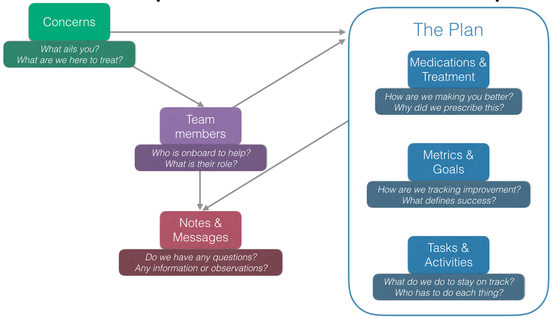
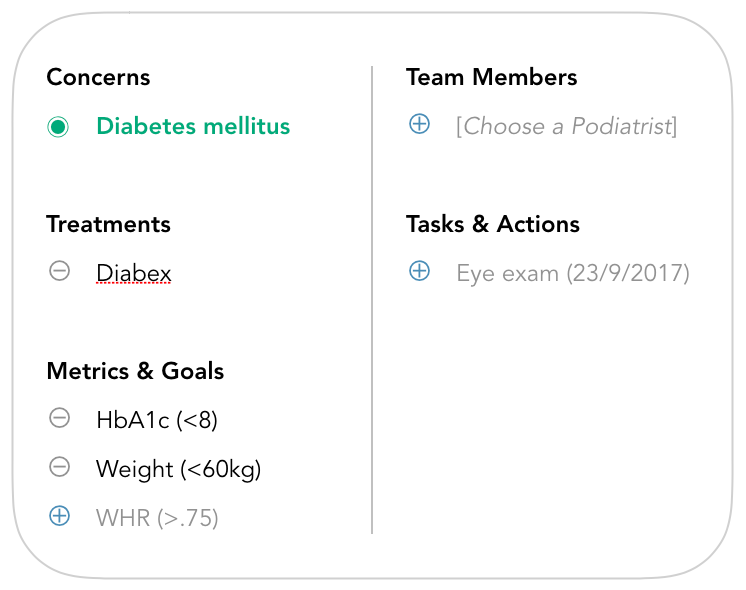
Mapping how a care program's parts relate gave the plan its structure. The reason the plan exists, a specific condition, sits at the top. Each condition decides the treatments, the extra helpers needed and the goals that show improvement. Some items are standard for a condition: blood sugar is central for diabetes, and many diabetic patients also see a podiatrist.
Pull in what the record already knows
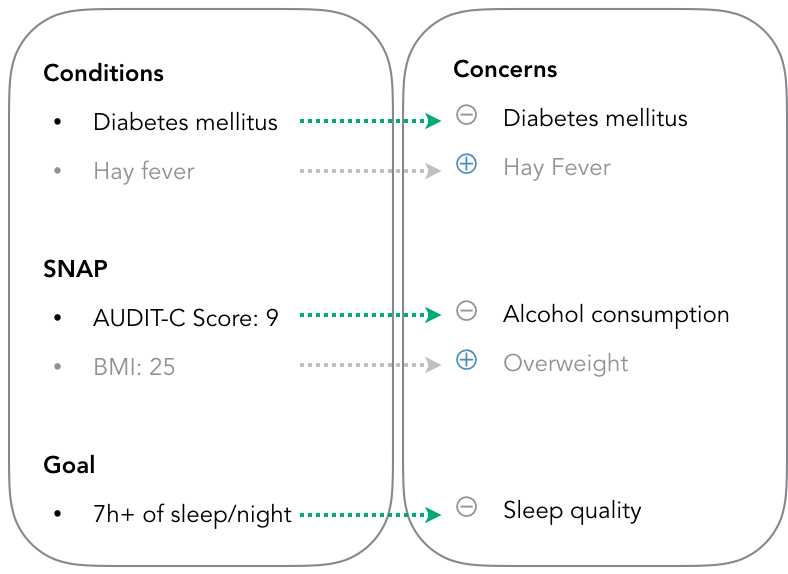
If the system knows how common elements relate, a doctor only needs to choose a condition. Related items come in from the patient's record, and anything in a danger zone, like historically high blood pressure, is suggested for the plan. The doctor fills only the gaps.
Show each person their part
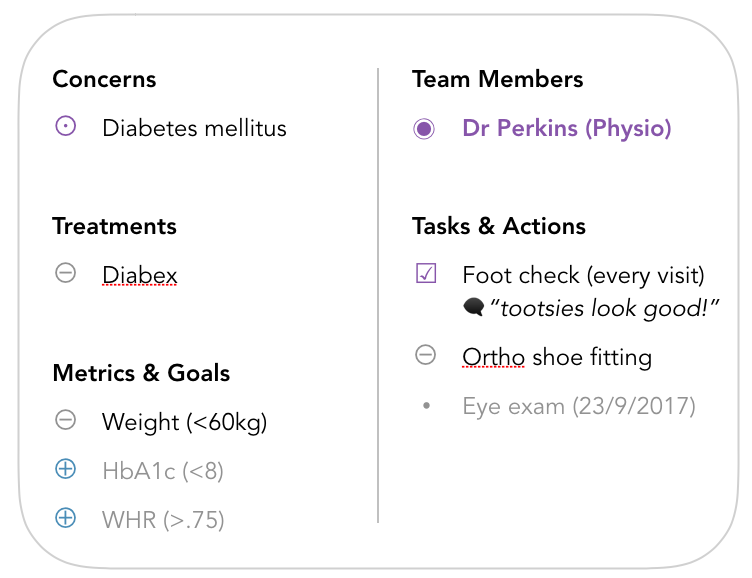
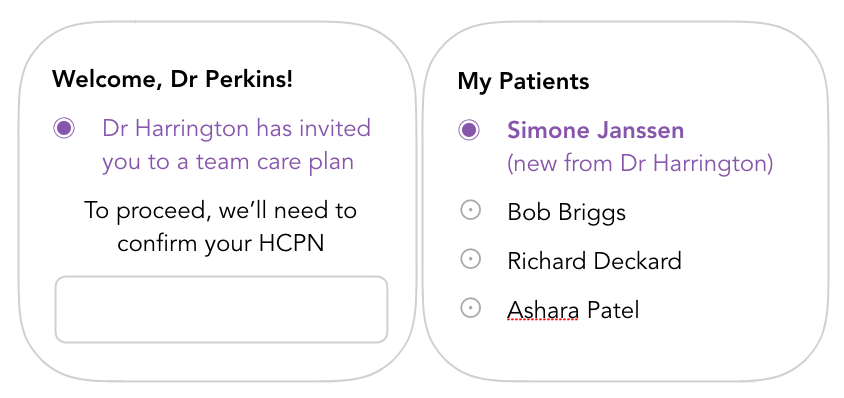
Every component is tagged by condition and type, so the plan can be filtered for each person. A physiotherapist sees diabetes-related notes and metrics, without sleep details as noise. A patient or carer gets a plain list of tasks and goals. New results, appointments and readings land in one shared place for the whole team.
Plans that start themselves
- Fewer stepsfor the GP: choose a condition, then fill only the gaps.
- One planseen differently by each member of the care team.
- TestedShown to GPs as a prototype. Useful for exploring what the record could do; the roadmap went to more immediate priorities.
Where the concepts led, and what they taught me, is in the Medical Director story.