JYLLIAN MARIE THIBODEAU, UX SPECIALIST
  • Home
  • About Me
  • CV
  • Projects
    • Immutable >
      • Eri's Store
      • Altar of Sacrifice
    • Hireup >
      • Expediting Onboarding
      • Automating Documentation
      • Project Dossier
    • Medical Director >
      • 2021: A GP Odyssey
      • Patient Timelines
      • Self-building Care Plans
      • Proactive Drug Warnings
    • UX Consultancy
    • Fantasia: Music Evolved
    • Unreleased Kinect Project
    • Dance Central Series >
      • Dance Central 3 (2012)
      • Dance Central 2 (2011)
      • Dance Central (2010)
    • Rock Band Series >
      • Rock Band Blitz (2012)
      • Rock Band 3 (2010)
      • Beatles Rock Band (2009)
      • Lego Rock Band (2009)
      • Unplugged (2009)
      • Rock Band 2 (2008)
      • Rock Band (2007)
    • VidRhythm
  • Home
  • About Me
  • CV
  • Projects
    • Immutable >
      • Eri's Store
      • Altar of Sacrifice
    • Hireup >
      • Expediting Onboarding
      • Automating Documentation
      • Project Dossier
    • Medical Director >
      • 2021: A GP Odyssey
      • Patient Timelines
      • Self-building Care Plans
      • Proactive Drug Warnings
    • UX Consultancy
    • Fantasia: Music Evolved
    • Unreleased Kinect Project
    • Dance Central Series >
      • Dance Central 3 (2012)
      • Dance Central 2 (2011)
      • Dance Central (2010)
    • Rock Band Series >
      • Rock Band Blitz (2012)
      • Rock Band 3 (2010)
      • Beatles Rock Band (2009)
      • Lego Rock Band (2009)
      • Unplugged (2009)
      • Rock Band 2 (2008)
      • Rock Band (2007)
    • VidRhythm
Picture
Picture
​full prototype
Designed:
 2017
Company: Medical Director
Product: Helix
Customer Audience:
  • Busy doctors
  • Patients on medication therapy

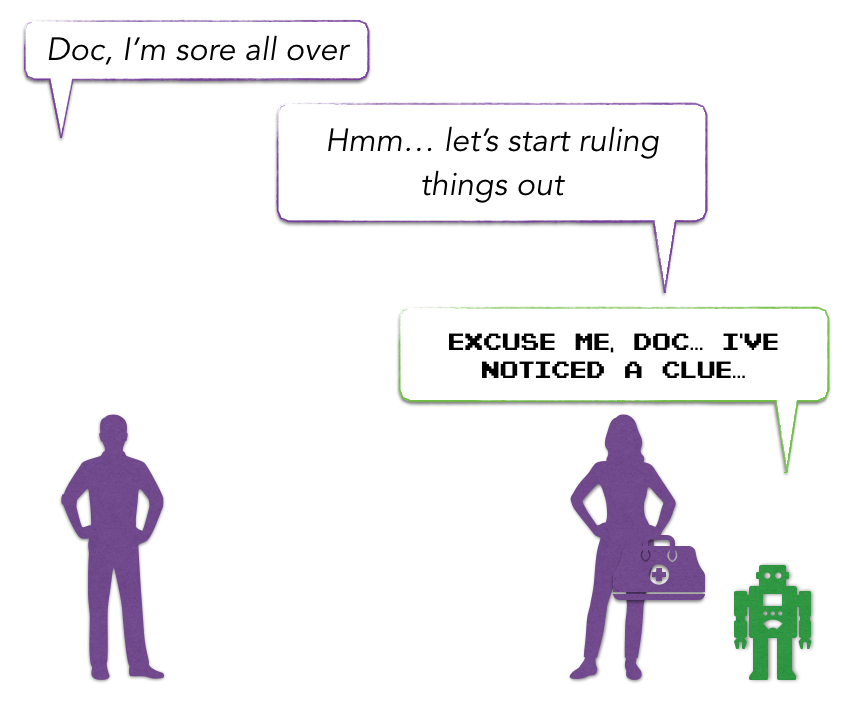
AusDI, a subsidiary of Medical Director, is home to a vast library of valuable information about healthcare and treatments.  For this project, we looked at ways this information could apply itself actively, and act as a detective's sidekick.
Like most libraries, the knowledge base is usually visited when someone wants a piece of information— reliable, useful, but ultimately passive.

To put this goldmine to more active use, we looked at ways the raw data could be used to drive new systems— 
something which would surface relevant information just as the doctor might like to reference it.

We decided to solve for a common story--
A patient is taking medication to treat a chronic illness.  They manifest one of the possible side effects.  They come to the doctor with mysterious complaints.  Could we connect the dots and call out the cause?
Picture
Picture
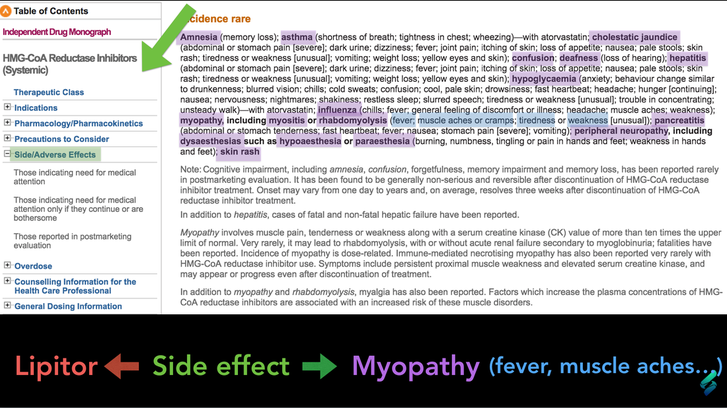
We start by analyzing the drug monographs— a nicely organized record of a given medication— conditions for which it's prescribed, mechanism of action, and (relevant to this project) its side effects.

By training a semantic parsing algorithm to look through the monograph for medically significant terms, and connect the related elements, we can assemble a rap sheet of all possible side effects associated with that particular drug.  This indexed list can then be pinned it against the file of any patient who has been prescribed that drug.
Picture
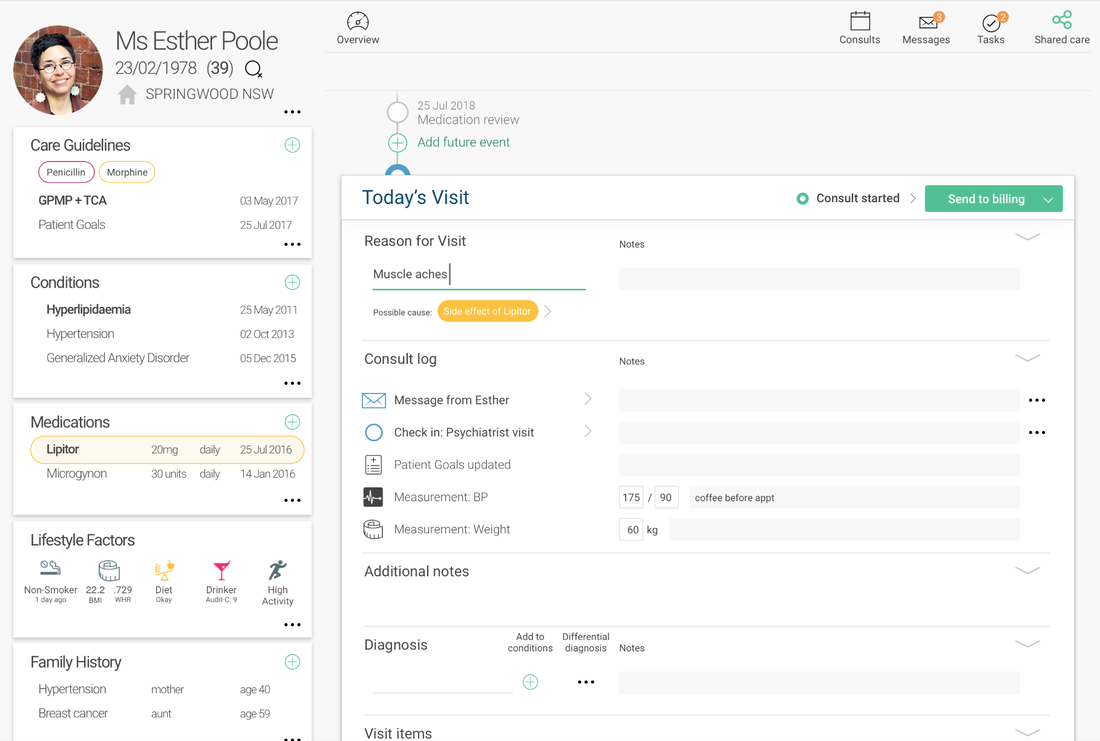
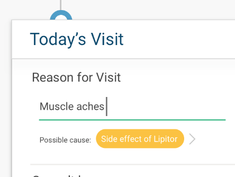
If/when the patient exhibits symptoms that match against the list, we throw up a flag and point to the possible culprit, highlighting the component and related elements of the patient's record.
Picture
Picture
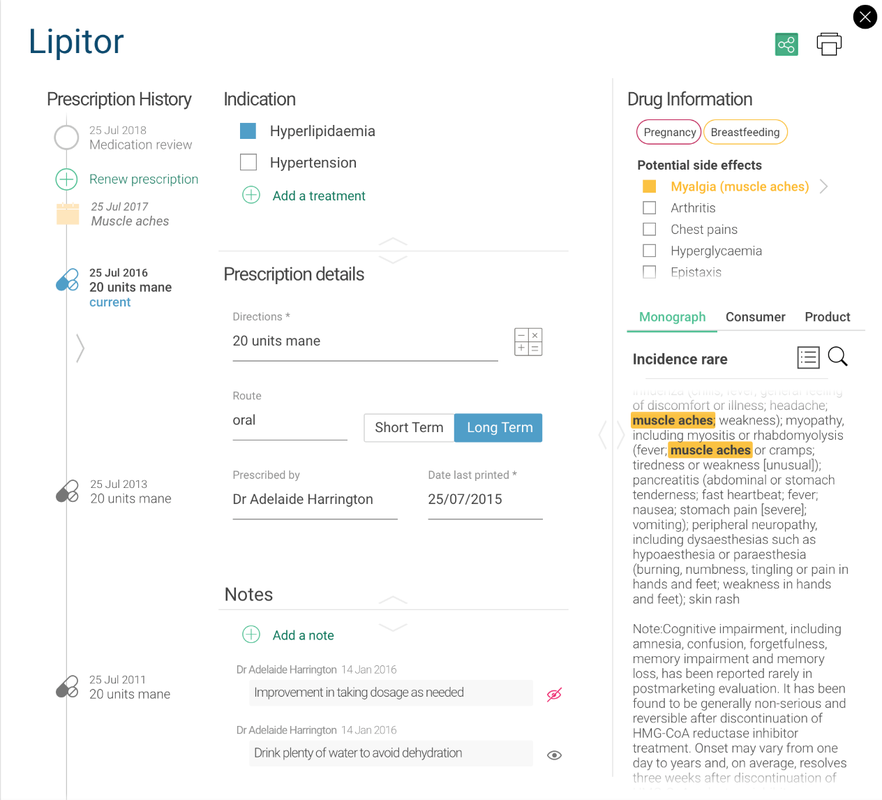
Interacting with the flag jumps the doctor to more detail about that drug. 

From here, they can look over a timeline of the patient's history with that prescription, as well as the full content of the monograph, pre-loaded to the relevant detail.